Showing posts with label science. Show all posts

Saturday, June 25, 2016

Frog on a log science


FROG ON THE LOG by LEYLAND PERREE


Storybook inspired science. 
Tadpole observation and transformation is a great way to explore the life cycle of a frog.
http://littlebrightsparks.blogspot.co.uk/2016/05/a-z-science-transformation.html?m=0

Tadpole magnets.
We had some magnets that have a ball and a tail which were great for tadpoles. So this science sctivity is about exploring magnets.

http://littlebrightsparks.blogspot.co.uk/search/label/tadpole?m=0


Tuesday, May 10, 2016

STEM Bath time

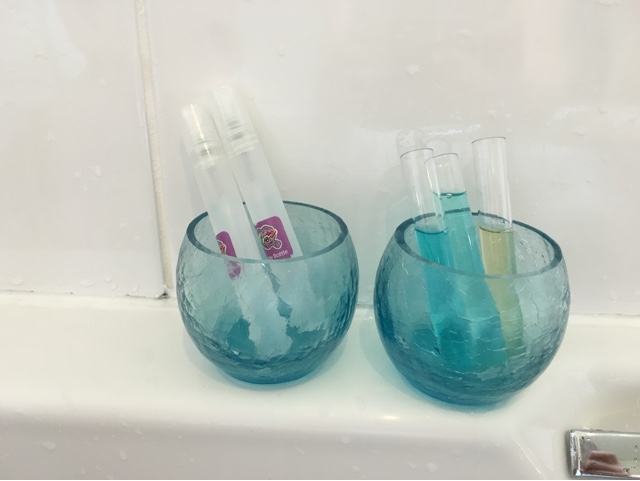
We had a set of sprays and plastic test tubes that I filled with different coloured soaps. My son arranged the foam numbers in order and they had to spray the numbers.


My two year old is starting to recognise numbers. My five year old had to spray them number of times on each balloon adding them together.
They mixed potions..

Thursday, April 21, 2016

Tadpole sock puppet


As you can see from the pictures this is one of my 2 year olds favourite Tadpole activity so far. 

Easy to do get a sock, some PVA glue and googley eyes.

We used a cotton bud to apply the glue.
Zac was very independent and wanted to do it himself whilst on his hand.


He then used it to talk to the real tadpoles.
We talked about the pond weed and he asked for some for his tadpole.
So I got him s selection of green items such as string , pipe cleaners and foam.

Zac 2.9 yrs

Pom Pom Tadpoles


We got a black Pom Pom , black pipe cleaner and googley eyes. Then wrapped pipe cleaner around the Pom Pom and glued eyes on.


Tuesday, April 19, 2016

Pebble tadpoles

My neighbour has a pond and I decided to ask him for some tadpoles for a science lesson I was doing at my sons school. So I got two tall jars and filled with pond water, pond weed and tadpoles. So after the visit /lesson we had them. The boys were so enthusiastic about them that they have stayed.  I am going to return them just as they transform into frogs.

They have been moved from jars to a vase. 
I added some pebbles so they can hide too. 

We got a chalkboard , pebbles and chalk. He used the tadpoles in the vase for observation . He held the pebble and drew a tail . He then drew eyes on the pebbles.
We discussed colours of the chalk and shape of the pebble could also be mentioned.

This was a quick activity on our tadpole Tuesday .
Zac talked to the pebble tadpoles , such imagination.
Zac 2.9 months
No Dylan today he was at school 


Thursday, April 7, 2016

Penguins and igloos snow play


My son's school topic of animals had a focus on the Arctic and Antarctic,  one suggestion was to make an igloo.

I remembered that at xmas I brought  artificial snow .

We followed the instructions that were basically add water to the powder.


Soon we had a tub full of artificial snow.

We coloured the snow with food dye.
They used diggers and tubs to play.

The tubs were ideal for snow castles : igloos.

They observed wind up penguins and how they moved on the snow.
The penguins were from crackers and are number which we used to race and add up. Identified odds and evens. 


The snow lasted for well over 10 days. In the fridge and out of the fridge. I think it would last much longer.


We had something like this 

http://www.amazon.co.uk/gp/aw/d/B00GL5LNDG/ref=mp_s_a_1_6?qid=1460040263&sr=8-6&pi=AC_SX236_SY340_QL65&keywords=artificial+snow+magic&dpPl=1&dpID=51ngPbo856L&ref=plSrch


Tuesday, August 18, 2015

Days Out in Birmingham: Cannon Hill Park

The summer holidays this year have been 7 weeks long and this can get very expensive when you are trying to entertain the children even though there are loads of free activities and places to go. Although the days trips to places that charge are 'usually' worth the money for the experience.
 
Cannon Hill in Birmingham have once again put on a beach/ fair and entertainment. The entertainment  and sand play is free but the fair charges.


We visited today and these are the FREE activities we did. Played in the sand and watched the entertainment on stage.
Played in the multiple parks on climbing frames, swings, slides etc.


We took our bikes and cycled around to find our picnic spot.


Had a picnic and saved the crusts for the ducks, geese and swans.


Played hide and seek in the bushes


Climbed up the small trees.

We went with friends and there were a range of ages and all enjoyed the variety of activities.
Dylan had another 4 year old to cycle with as he much faster than Me a Zac on his bike. Although Zac is very fast and I have to jog to keep up if he is at full speed. He went down a few hills and he lifted his legs up to roll, getting very confident on there. Dylan's friend had no stabilisers and I think this has helped me to convince him to try his without any. We will be going there to try this! Scary thought but a vital learning curve.

Well recommended for day trip or shorter visit. There is a brilliant path that is very wide, flat and safe for small children with bikes.

Other free activities - some of they may need forward planning.
  1. Bug collecting
  2. Wild life tracking
  3. Leaf identification/ match to tree- collect leaves as you go around and ask them match to another tree.
  4. Leaf wax rubbings
  5. Nature collage
  6. Create a journey stick- find a stick and pick up items of your journey and attach the to your stick.
  7. Scavenger hunt
  8. Park watch- tally the number of red bikes, dog etc.
  9. Sketch/ paint- you can take material to draw the scenery.
  10. Photography- to give them a camera to take their own picks (obviously not expensive ones)
  11. Sports/physical games like football, cricket or tig.
  12. Sound safari- monitor sounds
  13. Role play- act out favourite stories
  14. Flower safari- search flowers
  15. Sensory walk- blindfold them and get the to feel and smell objects
  16. Bark rubbing
  17. Create an outdoor sculpture
  18. Twig shapes
  19. Whistle the grass
  20. Make a mud pie

Paid activities also include golf , boat rides and I think tennis.


Sarah
Dylan 4.9 and Zac 2.1

Board Game TOTB: Guess Who


This is the first of the Board Game Thinking Outside Of The Box series.
The inspiration for this is that both my son and I like to invent new games to play and using games that we already had is loads of fun.

This game was one of my favourite and most played game of my childhood. The age indicates 6+ but I brought it for my son when he first turned 4. I would say he soon learned what questions to ask and steered away from copying the questions. The only problem is that he needs another person who isn't playing to read the names to him.


Here are TEN TOTB ideas for Guess Who

1. We could do a scientific observation of the people. Link it to variation of the population and use numeracy skills to track the characteristics that are the most popular in the sample of people from the population. Two people could do it and then compare results and discuss reliability.
2. Also he could use oracy skills to describe the individuals and the other person can guess.
3. You could use drawing skills to copy the individual for the other person to guess.
4. You could draw your own Guess Who character maybe a self portrait.
5. With the animal sheet you can also do a scientific survey and tally according to group of vertebrate.
6. You could use the names for the people and animals and get them to write them on a piece of paper
7. You could do a literacy content analysis of how many names start with each letter of the alphabet.
8. This same idea could be used to analyse the colours of the rainbow.
9. Math coordinates could be used to signal the target i.e 2 across and 2 up starting from the bottom left.
10. Story telling we could use the characters as characters in a story that we are going to make up. We could also combine story telling dice to help derive the rest of the plot.


I will post how we get on doing these activities ASAP!
This is not a sponsored post!

Saturday, August 15, 2015

Crane magnetic pick up


I tried this activity with my four year old about 1 1/2 ago and he loved it. So I wanted to try it with my 2.1 year old and he was more interested in the objects than the activity. Dylan liked using the wind up crane too. But I with Dylan my eldest he sat at the table do his attention was more focused .


Then Dylan came to check it out.
I used the sorting activity to stretch it for him. Wher he had to identify if it was magnetic or not? I also used objects that had both parts that were and weren't . But decided to place it in the magnetic part of the table if any part was magnetic.


I encouraged Dylan 4.9 to talk us through what he was doing and what he found using keywords like magnetic. I recorded this to keep. This helps develop his confidence and scientific enquiry skills .


We talked about what we notice I out the two piles and that the magnetic side were mostly metals but that not all metals are magnetic .


Dylan did this at 2.5

Thursday, April 24, 2014

Challenge and discover weather science : forest fires

I started off thinking of a fire experiment to do to link to st George's day and dragons but then noticed the 'Challenge and discover : weather series from inspiration laboratories .

So I thought up a simple science experiment and then researched to find many others have done the same . I wasn't sure if my son of three was too young but others have tried it with his age before.


The Science 

Fire is a chemical reaction that creates light and heat from oxygen and fuel. A lit candle needs the oxygen from the air in order to continue burning. 
A fire triangle is a good way to teach kids the three things needed.


What can we investigate?
If you limit the amount of air available, the candle's flame eventually goes out once it uses up all the oxygen. 
A. science experiment that gives your child a chance to see this concept in action, with a little numeracy and literacy practice thrown in.

What You Need:

  • Tea candle
  • 4 glass jars in different sizes 
  • Matches
  • Permanent marker
  • Pen or pencil
  • Paper
  • Stopwatch

What You Do:

  1. Begin by explaining to your child that fire needs oxygen from the air in order to burn. Ask her what she thinks will happen if you limit a candle's oxygen supply.
  2. Light the candle and place one of your jars over it. Watch and wait until it goes out. Was this what she expected to happen? What does she think will happen if you place a larger jar over the candle? How about a smaller jar?
  3. Put the jars in a row from smallest to largest, and help your child write the numbers 1, 2, 3, and 4 on the sides in permanent marker.
  4. Ask her to estimate how long it will take for the candle to go out as you place each jar over it. Make a table like the one below to record her estimates.
 
Time Estimate
Actual Time
1
 
 
2
 
 
3
 
 
4
 
 
  1. Light the tea candle, and place the first jar over it. As you do so, have your child start the stopwatch. How long does it take for the candle to go out? Record the actual time next to her estimate.
  2. Repeat step four with the three remaining jars.
  3. Compare your child's estimate to the actual length of time each candle burned. Did she predict that the candle would burn longer under larger jars? If not, point the pattern out and explain that the more air inside the jar, the longer the candle is likely to burn.
If you run out of fuel then the flame will go out.
You can time how long a tea lighter and a birthday candle lasts . Little ones may get bored watching so a recording that the time frame can be altered maybe useful. 

If you remove the heat the fire will go out.
To demonstrate this you can spray water onto the flame.

You can also talk to them about what to go in an emergency.  Introduce the 'stop , drop and roll' advice and ask why does this work ? linking back to the triangle. 

You could also tell them the emergency services number 999 in the UK. Then role play what to do /say in an emergency. 

Remember to reinforce that today's activities were not a game and fire isms dangerous and not to play with matches .

You could also talk about fire fighters, fire extinguishers and usefulness of fire. 

Remember not to leave the flame unattended and supervise children with this experiment all the time. Have a bucket of sand near by incase it gets out off control.

I will add pics of our experiment . 

Sarah Shan 

This is the equipment set up. We only had three jars and I think two were the same volume by the results but never mind.

We started off talking about safety and I asked Dylan what we were going to do. He said add water to the jars and blow out the candles.


I turned the jar over and Dylan had to press the green button on the ipad stopclock when I said go and press the red stop button when he saw the candle had gone out.


After the first experiment we used water to remove the heat.


Then I showed him bush fires in Australia and explained why they happen .

Then back to fire saftey and what to do if his clothes catch fire. Then showed him a clip on youtube stop, drop and roll. Then we found the smoke alarms and talked about the emergency phone number to call 999. We role played this. I was the operator and Dylan was in need of the fireman Sam lol.


Im not sure if I planted ideas in his head of making fire fun but I tried not to and was quite serious and controlling around the flames to emphasise the danger. I will probably revisit this again in a couple of months to reinforce it.